ServicesWhole-Home Filtration
Whole-Home Filtration in Guadalupe, Fitted Joint by Joint
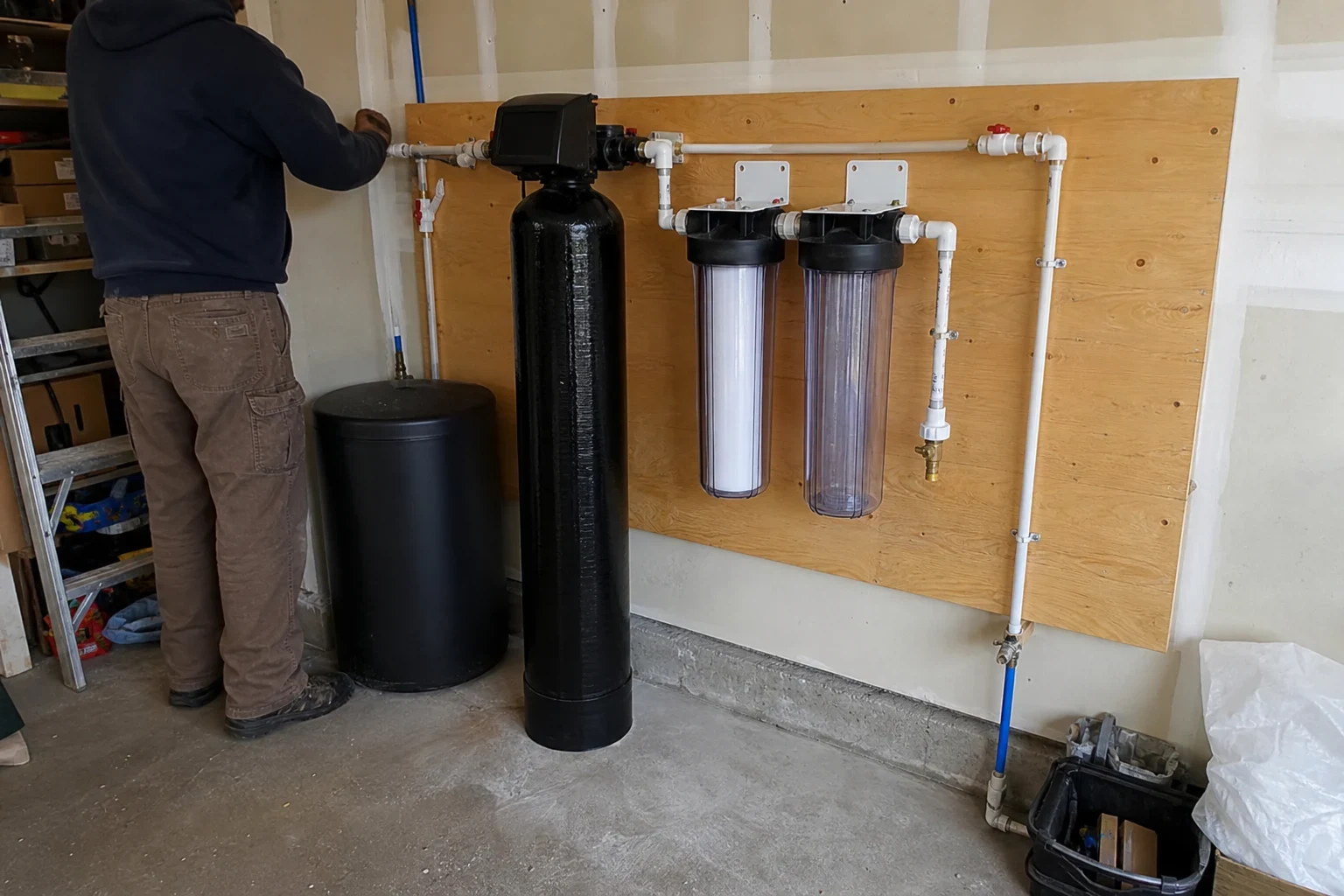
We put a carbon filtration system on the main water line so every tap in your home runs cleaner tasting water. Better showers, no chlorine smell in the kitchen. We test your water first, then size the system and plumb it in with care at every fitting.
How a Whole-Home Carbon System Works
This kind of filter goes on the main line at the point where water comes into the house, ahead of the branches to the kitchen, baths, laundry and water heater. The tank holds carbon media. As water passes through, chlorine clings to the carbon, and the bleach taste and odor go with it. The bathroom sink then pours the same water as the fridge.
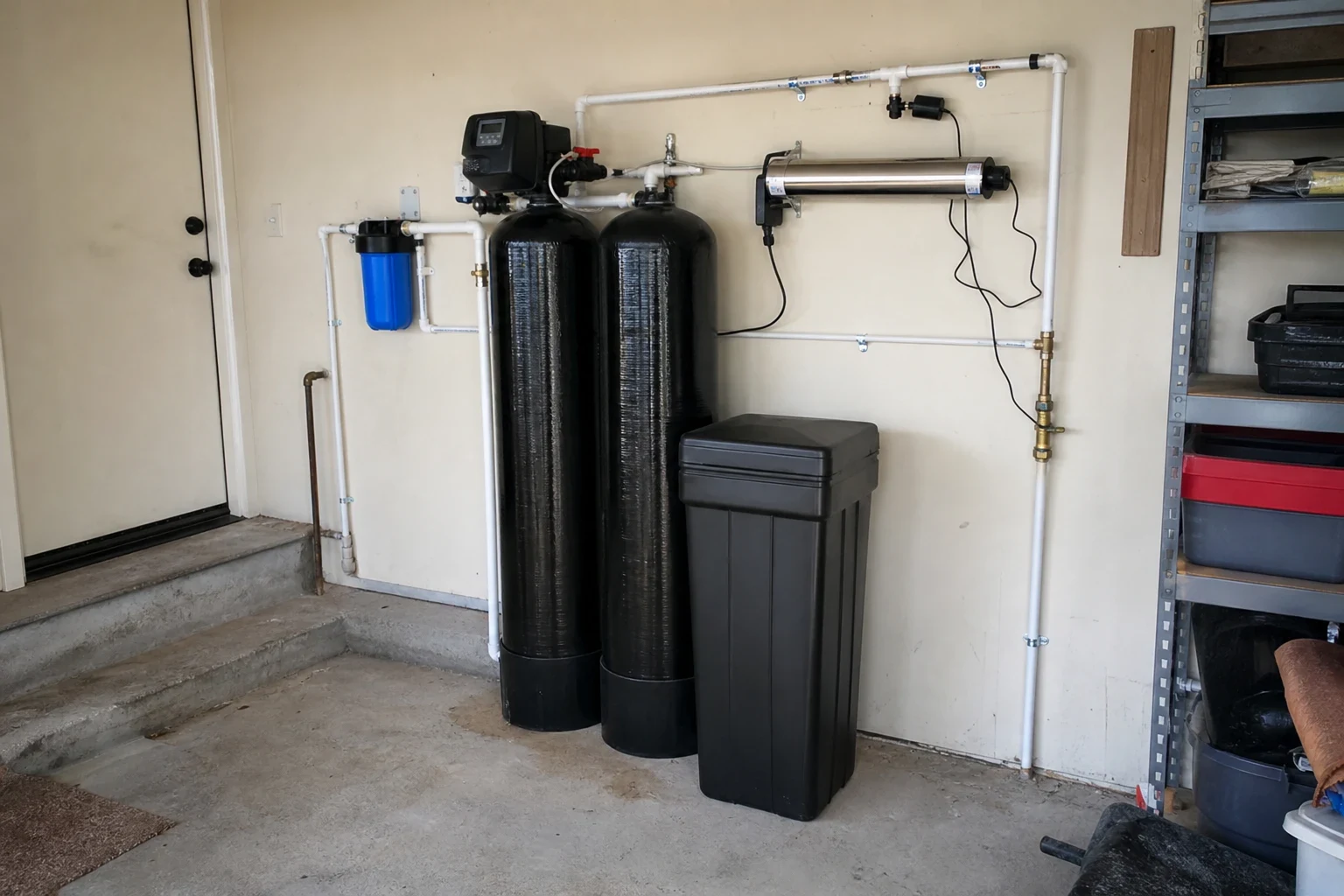
This is the system to choose when taste or odor is the complaint, or when a hot shower smells like a public pool. It is not a softener, though. Carbon lets through the minerals that leave white crust on faucets and showerheads. If the test finds hard water, we will go over adding one of our water softeners. For the cleanest drinking and cooking water, a reverse osmosis unit at the kitchen sink goes further than carbon can.
How long the system holds up is mostly settled in the first hour of the job: where the tank goes, how the pipe is supported and how the bypass is laid out. Those are the parts we slow down for.
What Your Install Covers
- 01
Testing comes first
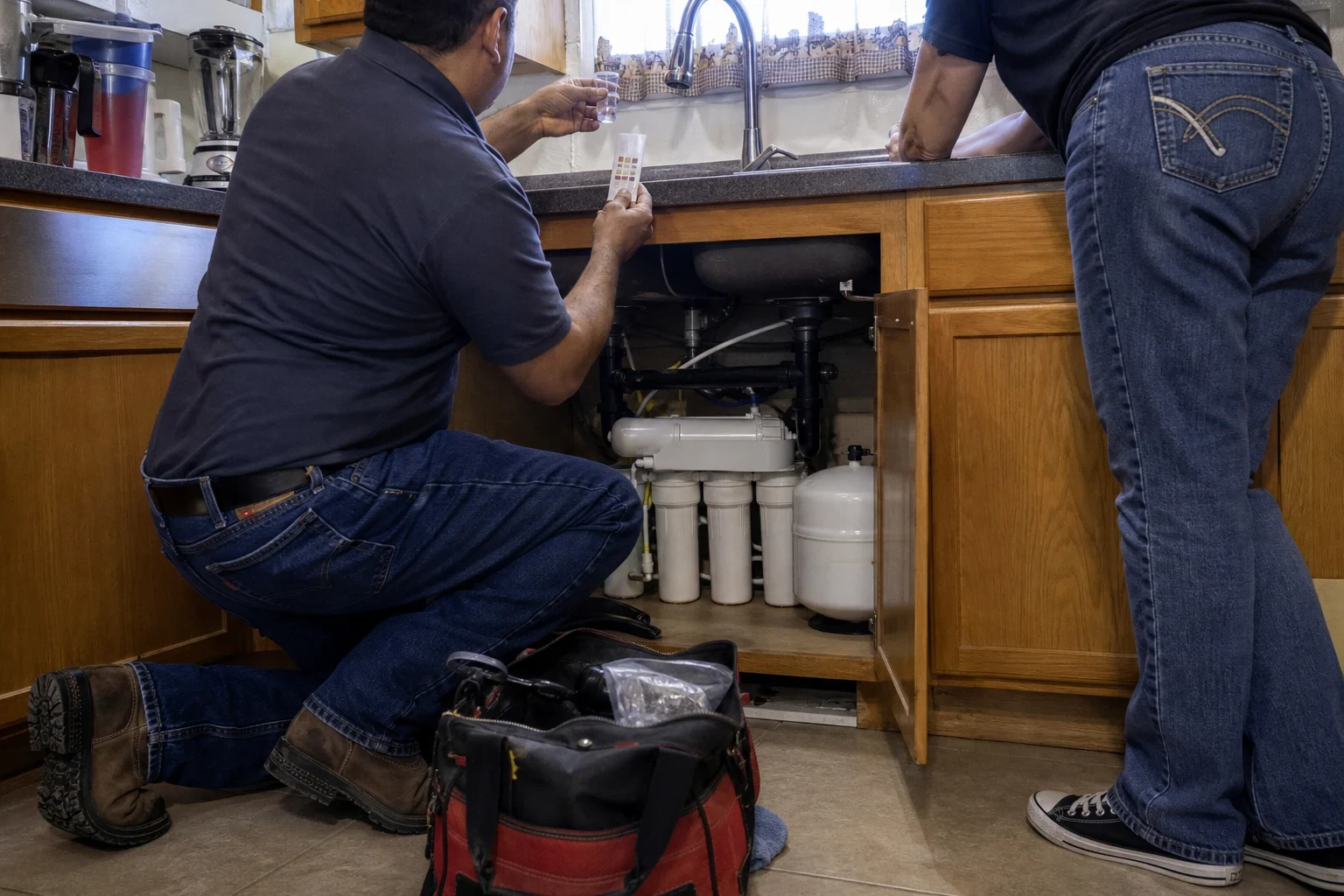
Before we recommend a thing, we check chlorine, hardness and a few other basics. There is no charge and no obligation. If your water calls for something other than filtration, you will hear that from us.
- 02
A tank sized for your household
We go by your bathroom count and how your family uses water. Too small a tank loses pressure with two showers going. Too large a tank costs you more than it needs to.
- 03
A prefilter for sediment
Sand and grit get stopped by a small prefilter ahead of the carbon. The main tank stays clear longer, and the prefilter costs little to replace.
- 04
A bypass that works
A three-valve bypass lets you take the system offline while the house still gets water. You will want that when the media is changed or if the unit ever needs service.
- 05
Firm footing and strapped pipe
We set the tank level on a solid base and strap the pipe on each side, so no fitting holds the weight. Sagging pipe is where slow leaks begin.
- 06
Install and cleanup at no extra charge
Our water treatment systems come with the install included. Before we go, we flush the fresh media, look over each joint for drips and take the packaging with us.
Questions about Whole-Home Filtration?
Call(480) 462-5719Signs Your Home Could Use It
Chlorine smell in the shower
Hot water lets chlorine off as steam. If the bathroom smells like a pool, a whole-home filter fixes it at every shower at once.
Drinks with a chemical edge
Your morning coffee or a glass of ice water has a flat, chemical bite. That bite usually comes from chlorine, and a carbon bed pulls it out.
A pitcher filter in every room
If you are changing fridge filters, faucet filters and pitcher cartridges, one system on the main line can replace most of that.
Dry skin and hair after showers
Some people notice their skin feels better once chlorine is out of the shower water. It is worth a test to see what you are working with.
Grit in faucet screens
Sand or specks in aerators point to sediment. A prefilter in front of the carbon stops it before it reaches fixtures and appliances.
How Install Day Goes
- 1
Test and plan
We test your water and look at your main line. Then we go over the installed system price with you on the phone, each part listed by name.
- 2
Pick the spot
Most homes here have the main line on an outside wall or in the garage. If the tank goes outside, we shade it, because Arizona sun breaks down plastic housings and fittings over time.
- 3
Cut in and connect
Our plumber shuts off the water, cuts into the main and installs the bypass, prefilter and tank. Joints are made to suit your pipe, whether copper or PEX.
- 4
Flush and check
We run water through the new carbon until it clears, then check pressure and look over every fitting with the water on. Most installs take part of a day.
- 5
Walk you through it
We show you the bypass valves, how to change the prefilter and when the carbon will need attention. You know where everything is before we go.
What Moves the Price
We don't give a number until we've seen your water and your plumbing. Two houses on the same street can need different setups. These are the things that push an install up or down.
- System size
- More bathrooms and higher water use mean a bigger tank and more carbon. That is the largest single factor.
- Type of carbon
- Standard carbon handles chlorine well. If your water is treated with chloramine, a catalytic carbon works better and costs more.
- Where the main line is
- An open garage wall is quick. A tight spot, a long run to reach the line or an outdoor install that needs a shade cover adds time and parts.
- Pipe condition
- Old or corroded pipe near the main sometimes needs a short section replaced so the new fittings have something sound to seal against.
- Pairing with other equipment
- Adding a softener or reverse osmosis at the same visit changes the setup. Doing it together often saves a second trip.
Common Questions About Carbon Systems
Does carbon filtration take care of hard water?
It doesn't. The carbon bed grabs chlorine along with the tastes and smells that come with it. Calcium and magnesium pass right through. If your test shows hard water, a softener handles that part, and plenty of homes run both with the carbon tank first in line.
Will my water pressure drop?
Not noticeably if the system is sized right. Pressure loss comes from undersized tanks or a clogged prefilter. We size to your flow and show you how to keep the prefilter clean.
How often does the carbon need changing?
It depends on the tank size and how much water your home uses. Carbon lasts much longer than a pitcher filter. We will tell you what to expect for your system and what signs mean it is time.
Do I still need reverse osmosis?
Not always. Plenty of people are happy with filtered water at every tap. For water you drink and cook with, an under-sink reverse osmosis unit at the kitchen faucet goes a step further than carbon alone.
Can the system go outside?
Yes, and that is common here. We set it on a level base, protect it from sun and keep the bypass easy to reach. Inside a garage works well too.
Find Out What Your Water Needs
We test your water for free with zero obligation, then tell you whether a whole-home system makes sense. If it does, you get a clear price with install included.