ServicesWater Softeners
Water Softeners in Guadalupe, Sized and Plumbed With Care
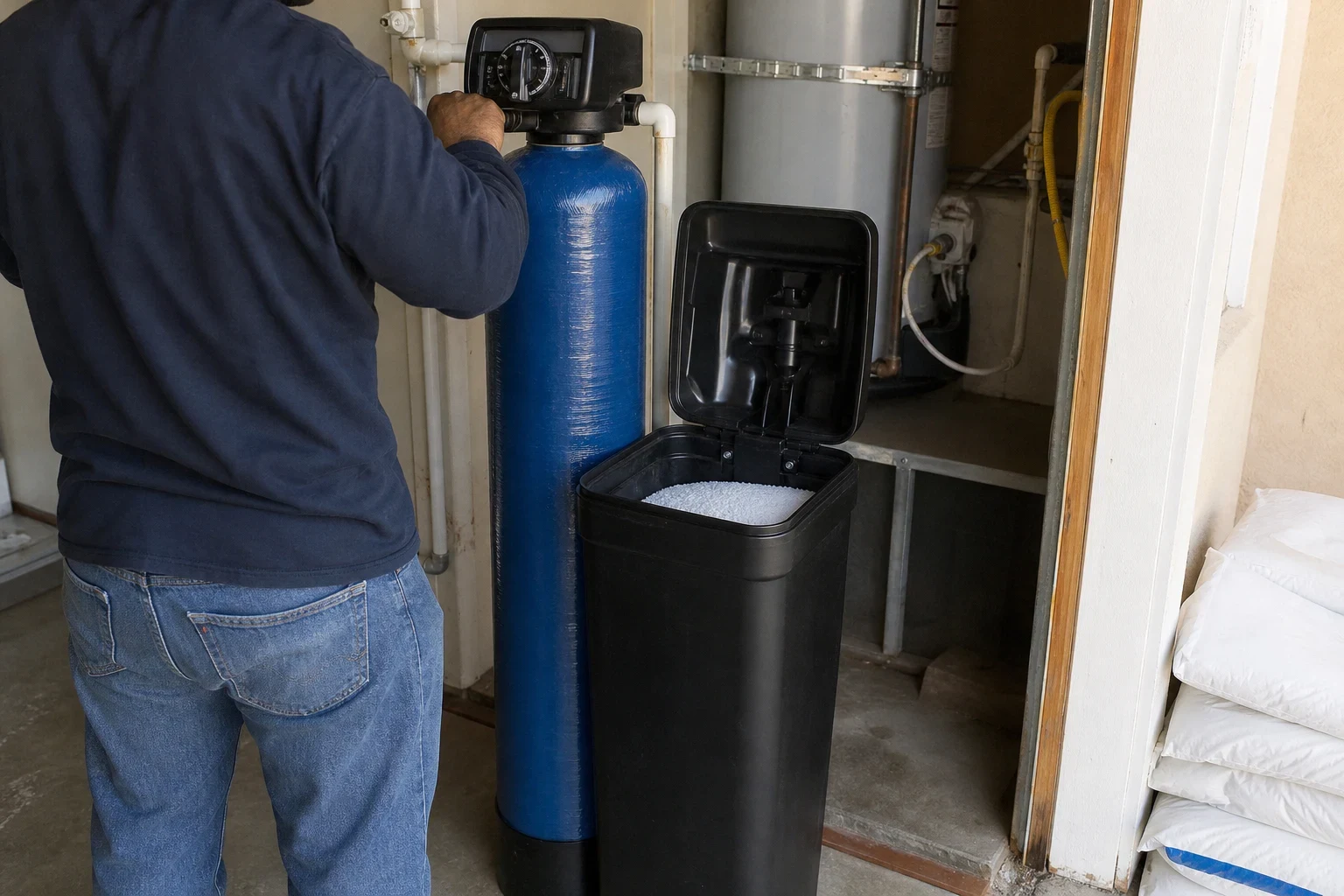
A softener stops scale from building up in your pipes, water heater and fixtures. We test your water first, size the unit to what we find, then install it with the drain, bypass and settings done right, so it keeps working long after we leave.
How Softening Works and Who Needs It
Calcium and magnesium ride along in hard water. Heat or evaporation leaves them behind as a white crust on faucets, on glass shower doors and inside your water heater. A softener trades those minerals out in a resin tank, so the water is already soft by the time it reaches the rest of your home.
Hard water is common across the Valley, but the number shifts from one house to the next. That is why the test comes before any equipment talk. If your result comes back mild, a softener would do very little for you, and we say so plainly. If it comes back high, we pick a tank that fits that number and the number of people living with you.
Most softeners that fail early do not fail because of the brand. They fail because of a kinked brine line, a drain with no air gap, or settings nobody ever adjusted. Those details are where we spend our time.
What Comes With a Softener Install
- A hardness test first
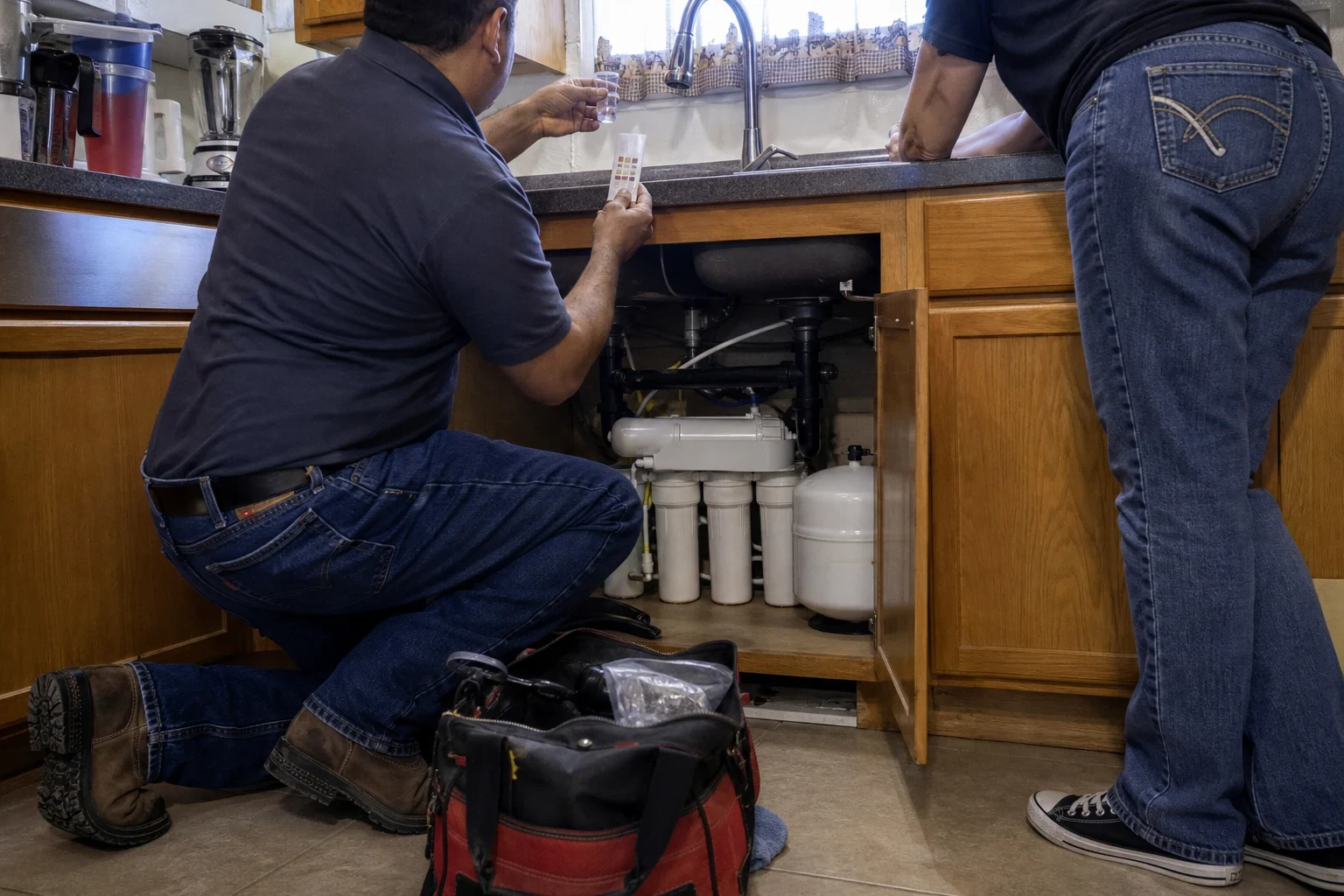
- Free water test with zero obligation. We read hardness on site and use that number to pick the tank size and set regeneration.
- Bypass valve on every unit
- We fit a bypass valve on each install. If the softener ever needs service, it can be taken off line while the rest of your home keeps running water.
- Drain line done properly
- The regeneration drain gets a real air gap and a secure run to the drain point. That keeps waste water from ever siphoning back toward the tank.
- Brine tank set level and clean
- We seat the brine tank on a flat surface, route the brine line without kinks, and add the overflow line so a stuck float does not flood the floor.
- Settings matched to your house
- We program hardness, household size and regeneration time, then walk you through the panel. No guessing at factory defaults.
- Labor is part of the deal
- Install included with water treatment systems. Your number already counts the fittings, the labor and the startup, not just the box the softener came in.
When Hard Water Starts Showing Up
Crust that keeps coming back
A chalky white ring grows back on the faucet or showerhead a few days after you clean it. That is mineral left behind as the water dries.
Spotty dishes and glass
Cloudy glasses straight out of the dishwasher usually mean minerals are drying on the surface.
Crackling from the water heater
Scale that piles up on the bottom of the tank snaps and pops when the burner kicks on. The heater then burns more energy to give you the same hot shower.
Soap that will not lather
If shampoo and dish soap seem weak, or you are using more than you used to, minerals may be getting in the way.
An old softener that quit
A unit that runs out of salt fast, never uses salt, or leaves water feeling hard again is worth a look. Sometimes it is a setting or a clogged injector, not a dead unit.
What Moves the Price
We give you installed system pricing by phone once we know your hardness and see your setup. The number covers the unit and the install. These are the things that change it.
Your reading and your headcount
Each person in the house adds to daily water use, and each grain of hardness adds work for the resin. Put together, those two numbers decide how big a tank you need.
Existing loop or new plumbing
A sound softener loop is a simple tie-in. No loop, or a corroded one, means more pipe work.
Drain access
A drain close to the unit keeps things short. A long run to reach a proper drain point adds time and material.
Removing an old unit
Taking out and hauling away an old softener adds a little to the job, and we price it as its own line.
How Install Day Goes
- 1
We confirm the test and the spot
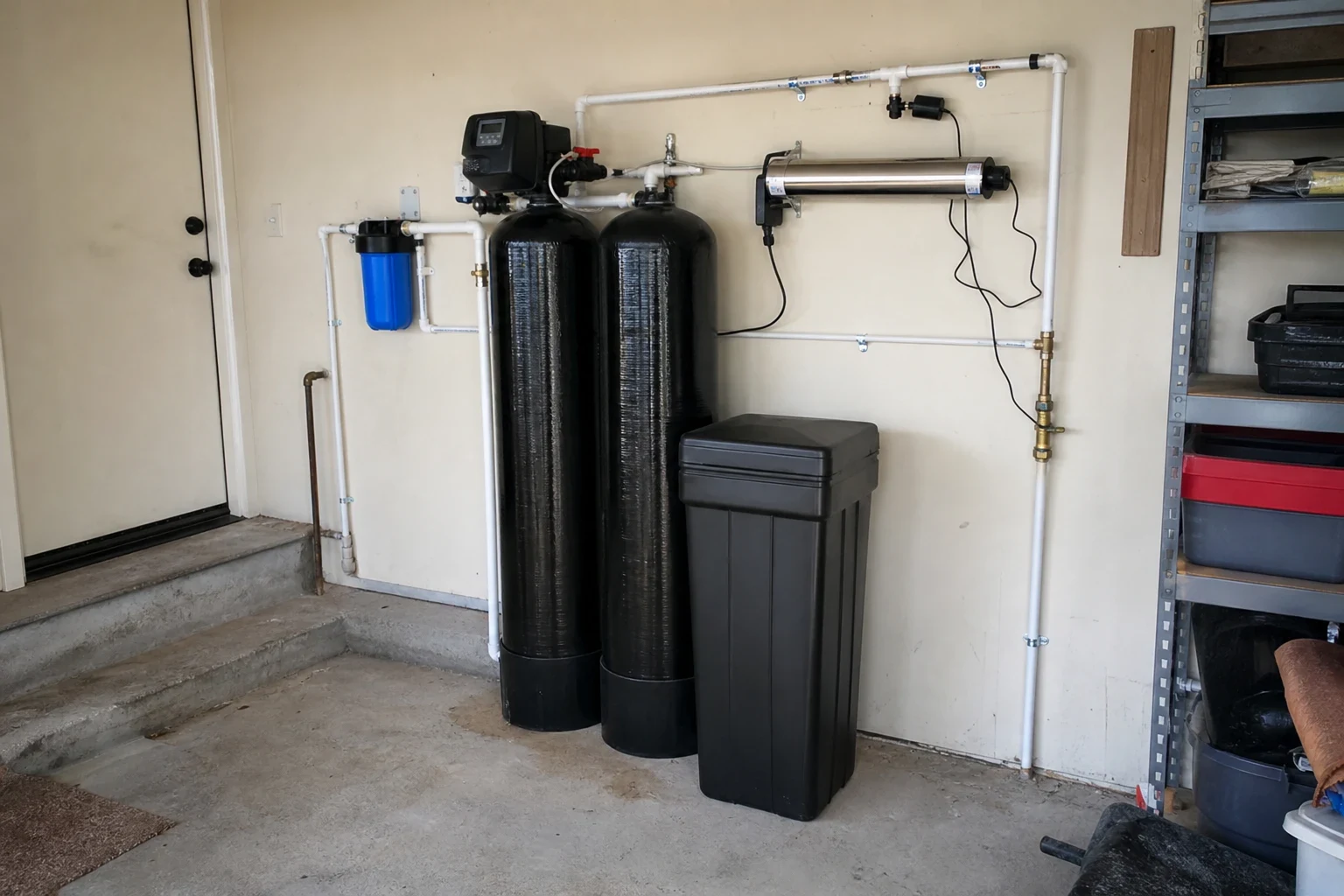
We recheck your hardness and look at where the unit will go. Many homes here already have a softener loop near the garage, and we check that it is sound before we tie in.
- 2
We protect the area and shut off water
Drop cloths go down, the main gets shut off, and we tell you roughly how long you will be without water.
- 3
We plumb, drain and level
The unit goes in with the bypass, the drain gets its air gap, and the brine tank is set level with the overflow connected. Every joint is checked under pressure before we move on.
- 4
We program, flush and clean up
We set the controls, run a first regeneration, and test the water at a tap to make sure it reads soft. Then we haul off packaging and leave the space as we found it.
Water Softener Questions
Do I really need a softener, or can I skip it?
It depends on your number. We test your water for free and tell you plainly. If hardness is low, you would be paying for equipment that does very little, and we will say so.
Will a softener get rid of the chlorine smell?
It won't. Softening goes after calcium and magnesium and leaves chlorine where it is. Whole-home filtration with carbon takes care of taste and odor at every tap, and it can sit in the line ahead of a softener.
Is softened water okay to drink?
For most people, yes. The process adds a small amount of sodium. If that matters to you, a reverse osmosis system under the kitchen sink gives you drinking water with most of it taken back out.
How often will I add salt?
That comes down to your hardness, how much water your home uses and how the unit is set. Once we program it, we tell you what to expect and show you how to check the level in the brine tank.
Can you work on the softener I already have?
We will look at it during the water test. If the problem is a setting, a clogged line or a worn part, we tell you that before suggesting a new unit.
Find Out If a Softener Is Worth It
One call sets up a free water test. You get your hardness number and a straight answer on whether a softener fits your home.