ServicesReverse Osmosis
Reverse Osmosis in Guadalupe, Fitted Under Your Sink
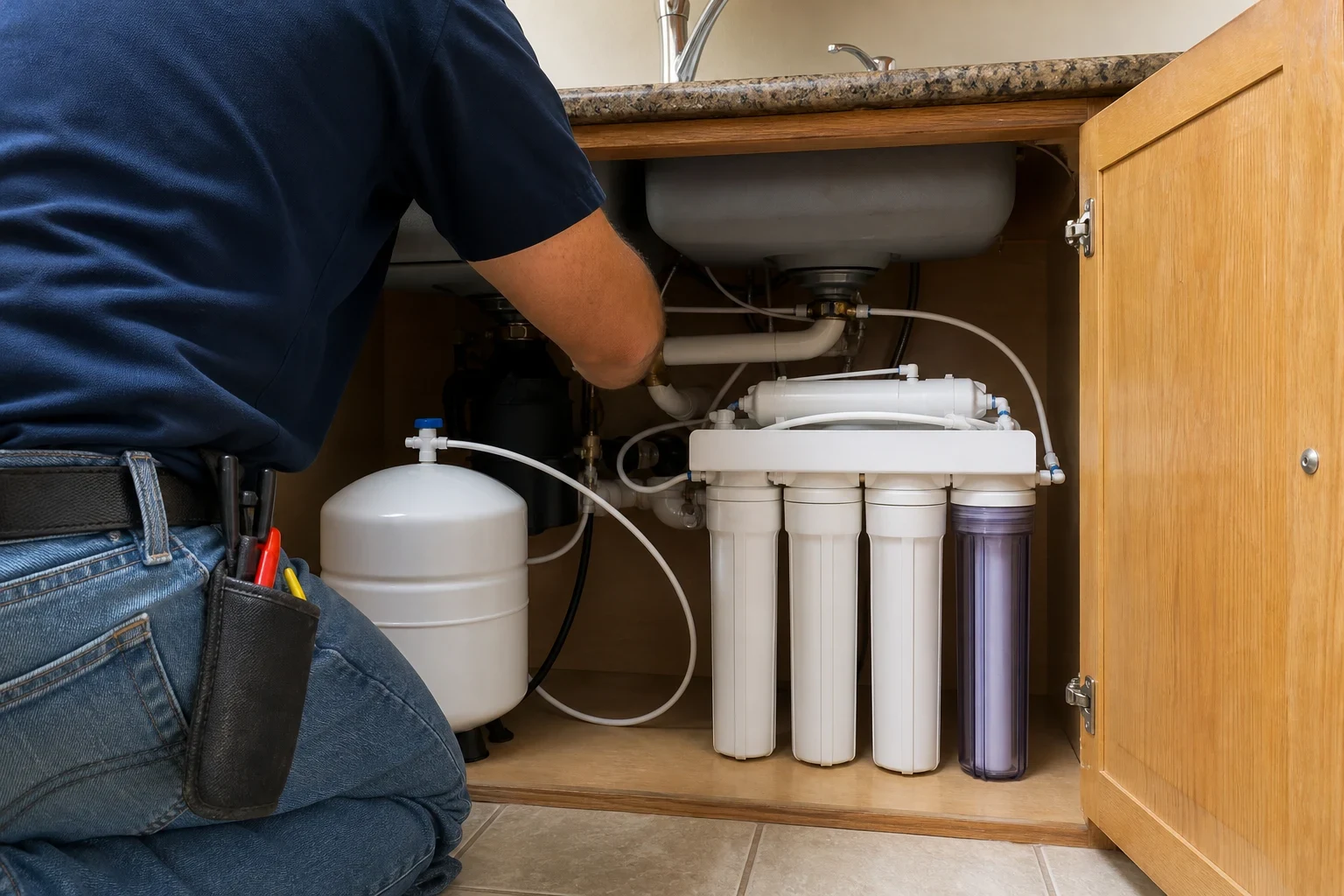
A reverse osmosis system gives you filtered water at the kitchen sink for drinking, coffee and cooking. We test your water first, then install the system so the fittings stay dry, the drain stays quiet and the filters are easy to change.
What Reverse Osmosis Does for Your Home
Reverse osmosis pushes water through a very fine membrane. Most dissolved minerals, salts and many trace contaminants stay behind and rinse down the drain. What comes out is clean, low-mineral water at its own faucet. Only that one tap gets the treatment. Your showers, laundry and other faucets keep running on regular supply water.
It is the right call when taste bothers you, when you are hauling cases of bottled water home, or when a test shows more dissolved solids than you want in your glass. It is also a good extra step if you worry about older plumbing. If the trouble is crusty buildup on faucets or a bleach smell when you bathe, whole-home filtration or a water softener may suit you better. The free water test helps sort that out.
These systems usually fail at the small stuff. A drain saddle in the wrong spot. A push fitting not fully seated. A tank set at the wrong pressure. We take our time on those parts, because that is what decides whether the system runs quietly for years.
What Comes With Your RO Install
- 01
Shutoff on the cold supply
The system connects to the cold line under your sink through its own shutoff. That way a filter change only stops the RO, and the kitchen faucet keeps working.
- 02
Drain connection with an air gap
We mount the drain saddle on the tailpiece above the trap, with a clean hole and a tight seal. Placed correctly, it stays quiet and keeps waste water from flowing back toward the membrane.
- 03
A dedicated drinking water tap
When your sink has an unused hole, say from an old sprayer or soap dispenser, the faucet goes there. If not, we drill one with the right bit for your counter, granite and quartz too, and seal the base.
- 04
Clean tubing and secure fittings
We cut the tubing square and route it with no kinks, away from the disposal and the hot line. Each push fitting is pressed all the way in and given a pull to make sure it's locked.
- 05
Tank air check and startup flush
Before filling, we test the air charge in the empty tank. Then we run the new filters and membrane through a flush, which clears out carbon dust and that first-day taste before you pour a glass.
- 06
Optional line to the fridge or ice maker
If you like, we run tubing to your refrigerator so the ice maker and water dispenser use RO water as well. The install comes included with the water treatment systems we sell.
Questions about Reverse Osmosis?
Call(480) 462-5719Signs an RO System Makes Sense
You buy bottled water every week
If the cart always has a case of water in it, a system at the sink usually pays you back in trips and plastic alone.
Tap water tastes off
A chlorine or mineral taste shows up most in plain water, coffee and tea.
Spots and film on glasses or kettles
White residue after water dries points to dissolved minerals. A test tells us how much.
Older plumbing in your home
Water can pick things up from old pipes and fittings on the way to the tap. Reverse osmosis adds a layer of protection right where you fill your glass.
Cloudy ice cubes
Minerals and trapped air make cloudy ice. Lower-mineral water usually freezes clearer.
How the Job Goes
- 1
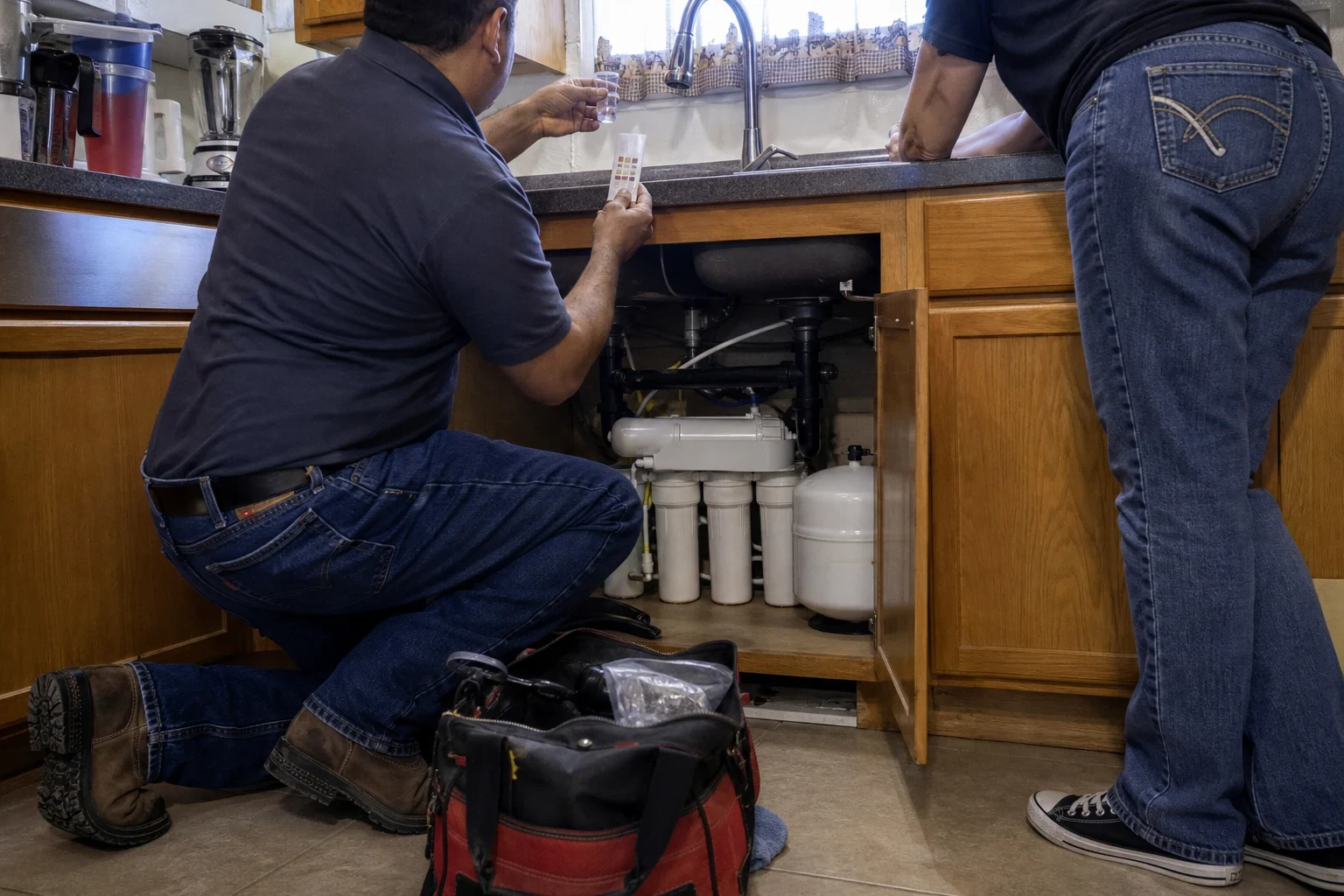
Free water test
We test your tap water and look under the sink. We check water pressure too, since a membrane needs enough of it to work well.
- 2
A plain recommendation
We tell you whether reverse osmosis fits, which setup suits your space, and give you installed system pricing by phone. If it is not the right fit, we say so.
- 3
Install day
We clear the cabinet, lay down a towel and mount the unit high enough for easy filter changes. Most kitchens take part of a day, not all of it.
- 4
Leak check and walkthrough
We pressurize everything, wait, then check each joint again by hand and with a dry paper towel. Before we leave, we show you the shutoff, the filter order and what to watch for.
What Sets Your RO Price
No two kitchens are set up quite the same, so we quote once we've seen your sink and your water results. The unit is only one piece of the price. Your cabinet space and any add-ons make up the rest.
- Tank or tankless
- Units with a storage tank and tankless units are priced differently. An extra stage, like one that adds minerals back, bumps the price up slightly.
- Where the faucet goes
- An open hole already in the sink makes this step fast. Drilling granite or quartz takes diamond bits and more labor.
- Room in the cabinet
- A disposal, a deep basin or a tangle of pipes may call for mounting the unit off to the side or changing the layout.
- Running a line to the fridge
- Labor depends on how far the tubing goes and which way it travels, along the cabinets or below the floor.
- Weak water pressure
- When pressure runs low, the system may need a booster or permeate pump to produce water at a steady pace.
Reverse Osmosis Questions
Does an RO system waste a lot of water?
Some water does go down the drain. That flow carries off what the membrane holds back, and it keeps the membrane from clogging. The amount depends on the unit and your water pressure. Newer designs and a permeate pump lower it, and we walk you through the figures for the model you choose.
Is there room for RO if I have a disposal?
In most kitchens there is. We lay out the filters and tank around the disposal and route tubing so it never touches it. When the cabinet is packed, part of the system can go on a side wall or in the next cabinet over.
How often do the filters need changing?
Prefilters are usually changed about once a year, and the membrane lasts longer. Your water and how much you use set the real schedule. We mount the housings so a change takes a few minutes.
Does reverse osmosis remove the healthy minerals?
It removes most minerals along with everything else. Your body gets far more minerals from food than from water. If you prefer the taste of mineral water, a remineralizing stage can add some back.
Do I still need a water softener?
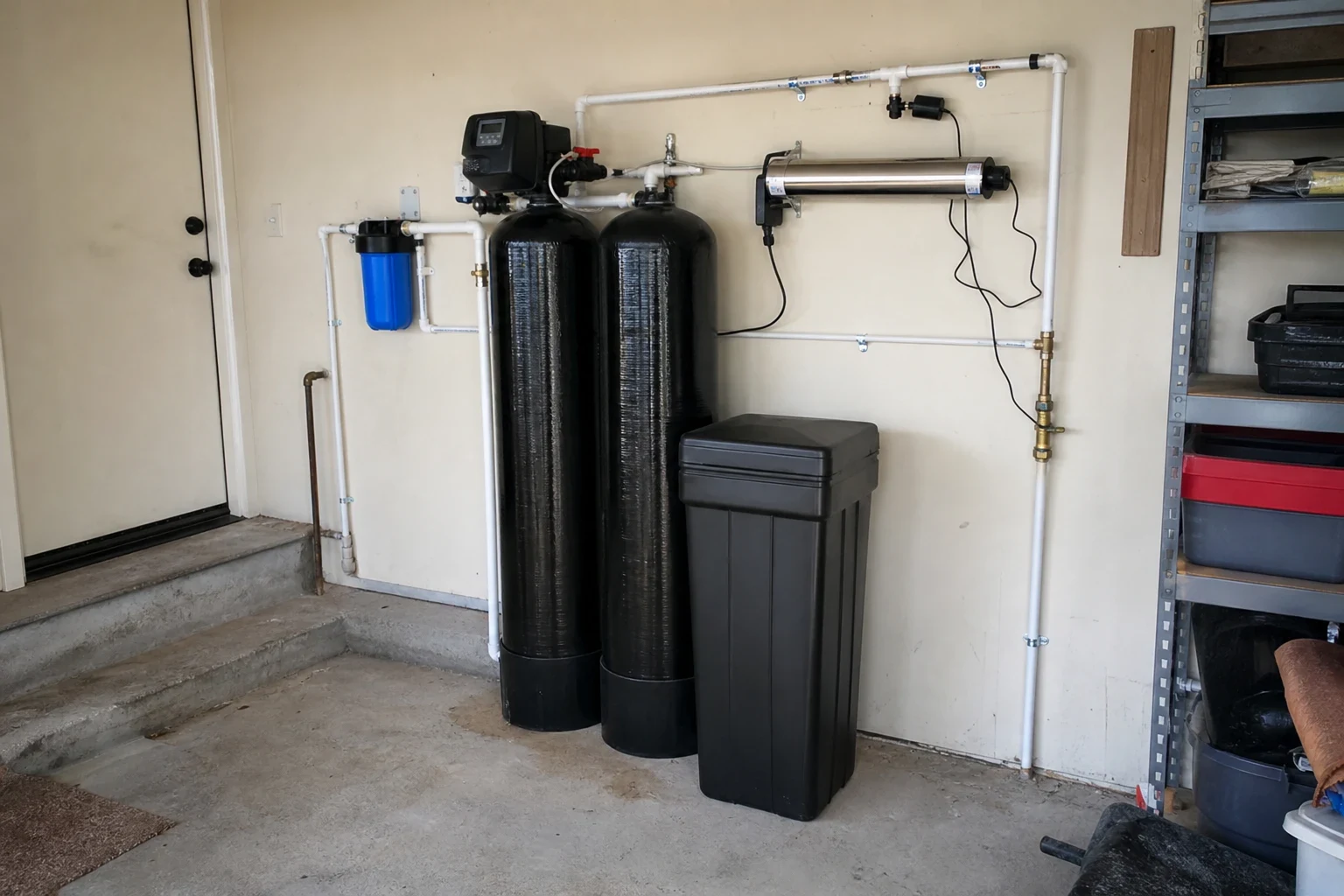
Reverse osmosis only treats one faucet. If hard water is scaling your fixtures, heater and shower, a softener handles that. The water test shows whether you need one, both or neither.
Find Out If RO Fits Your Kitchen
We start with a free water test and a look under your sink, with no obligation. Then you get a straight answer and pricing for the installed system.