ServicesWater Testing
Water Testing in Guadalupe, With Every Number Explained
We come to your home, test the water at your tap and tell you what the numbers mean in plain words. The test is free and there is no obligation. If your water is fine, we say so. If it needs work, you'll know exactly what kind.
What a water test tells you
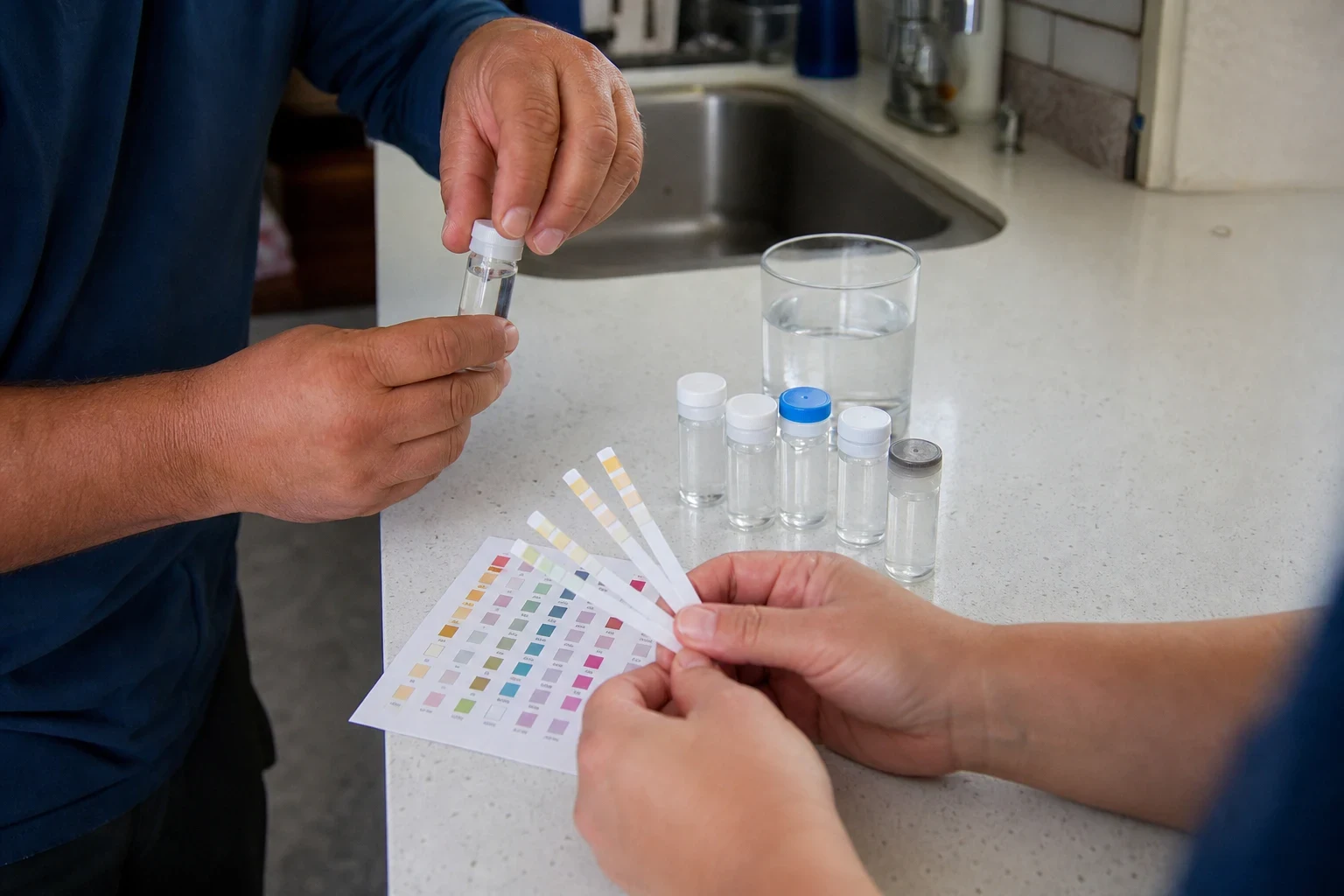
A water test measures what is actually coming out of your tap: hardness, total dissolved solids, chlorine, pH and iron. Those numbers decide whether you need a water softener, whole-home filtration, a reverse osmosis unit, some mix of them, or nothing at all.
Most homes around Guadalupe have hard water, and the white crust on faucets and shower glass shows it. Hardness is only part of the picture, though. A home where the water tastes like a pool needs a different fix than one where scale is building up in the water heater.
We test first because everything after depends on it. A softener sized off a guess either runs out of capacity too soon or burns through salt. Good equipment set up on bad numbers still disappoints.
What we check during the visit
- Hardness
- We measure hardness in grains per gallon. That one number sets the size of a softener and how often it regenerates, so we take it carefully and write it down.
- Total dissolved solids
- TDS is everything dissolved in the water. It tells us how hard a reverse osmosis membrane would have to work and often explains a flat or salty taste.
- Chlorine
- City water is treated with a disinfectant. We check the level at your tap so we know whether a carbon filter would make a real difference in taste and smell.
- pH and iron
- Low pH can be rough on copper lines over time. Iron leaves orange or brown stains. Either one changes which equipment makes sense.
- A look at your plumbing
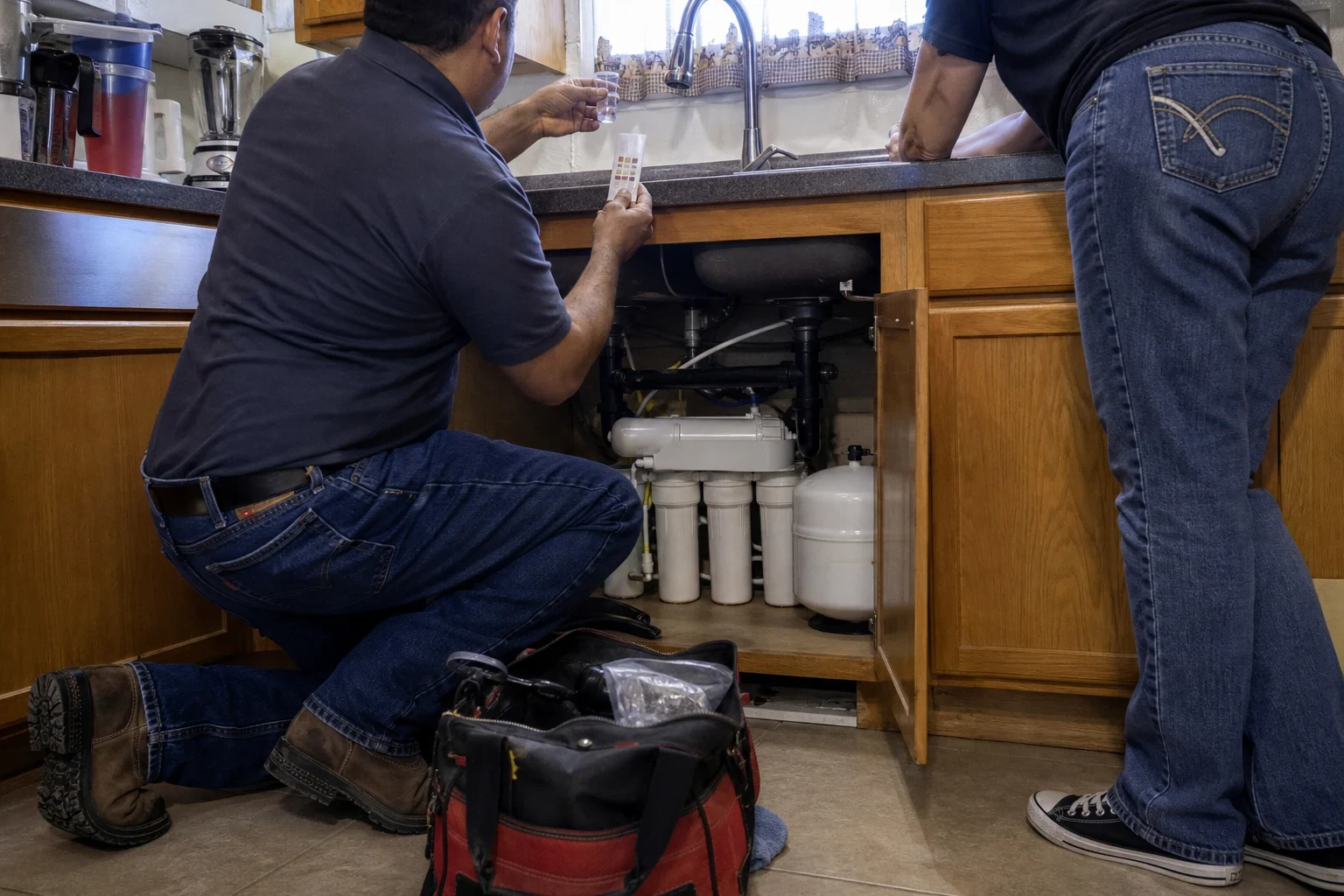
- While we're there, we look at where the main line comes in, the pipe size and material, and whether you have an existing loop or an old system. That tells us what an install would actually involve.
- Results in writing
- You get every reading written down with a short note on what it means. Keep it. It's yours whether you buy from us or not.
Signs it's time to test your water
White scale on fixtures
Crust around faucets, spots on dishes, cloudy shower doors. A test shows how hard the water really is, so any softener is sized right the first time.
Water that tastes like a pool
A strong chlorine taste or smell at the kitchen tap is common and fixable. Testing shows the level so you aren't guessing at filters.
A noisy or short-lived water heater
Crackling or knocking while the heater runs usually points to mineral sediment collecting in the tank. Hard water shortens a tank heater's life, and a test shows how much of that you're dealing with.
Older pipes
If your home has older copper or galvanized lines, it's fair to ask what the plumbing adds to your water. We'll tell you what our in-home test can answer and when sending a sample to an outside lab makes more sense.
A system that doesn't seem to work
You already have a softener or filter but still see spots or taste chlorine. A test before and after the unit shows whether it's doing its job or just taking up space.
The test is free. Here is what sets system pricing
You pay nothing for the water test, and you are not obligated to buy. If you decide on a system, the install comes included with our water treatment systems, and the price depends on what the test and the visit show.
Your hardness level
The harder the water, the bigger the softener or the more often it regenerates. The hardness number picks the size, and size accounts for a large share of the cost.
Other things in the water
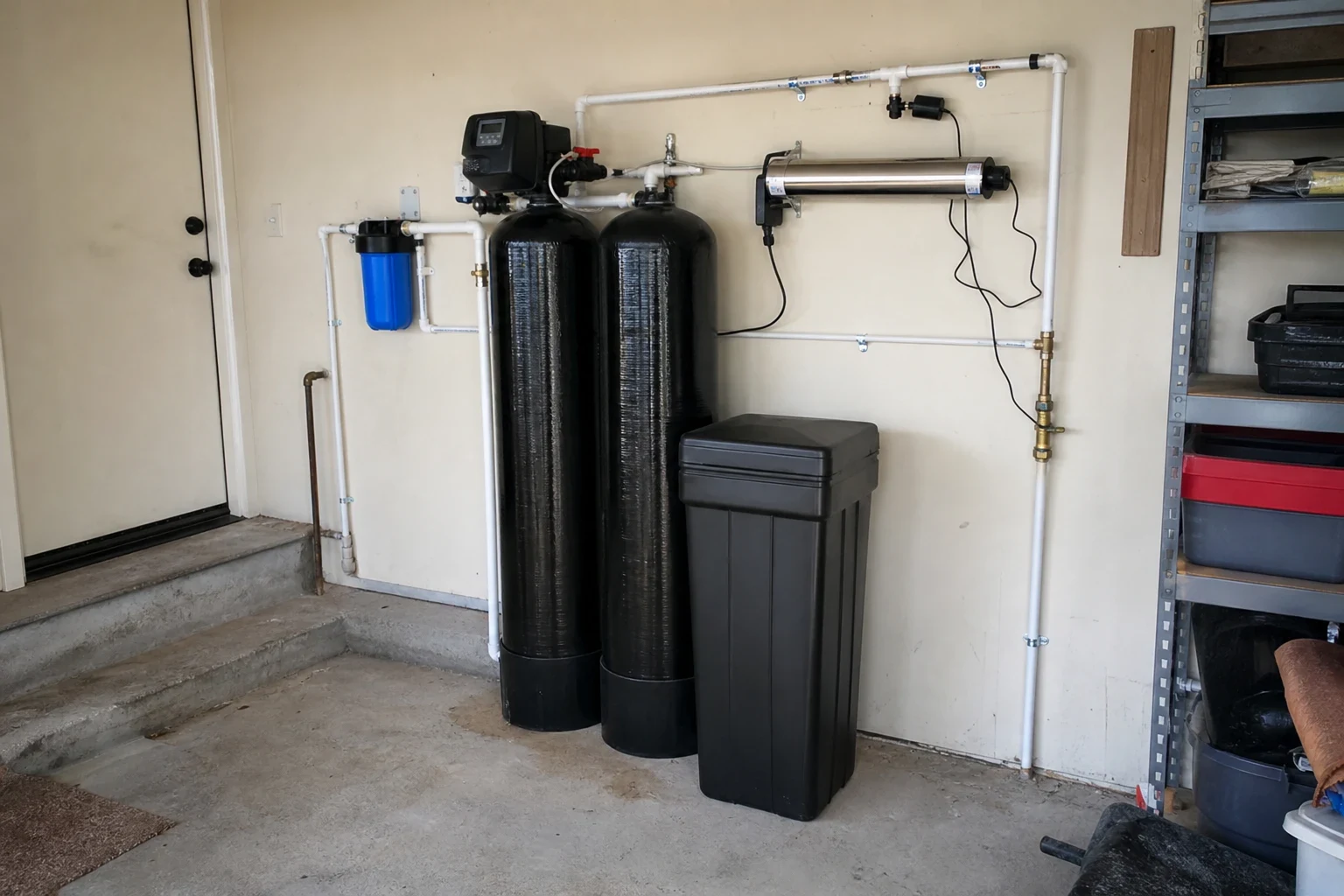
Hardness by itself calls for a softener. A heavy chlorine taste can bring carbon filtration into the plan. If you want better drinking water, an under-sink reverse osmosis unit may be added.
How your pipes are laid out
A house with a loop already plumbed is an easier job than one that needs new line run to it. The pipe's material and size play a part too.
Nearby drain and outlet
Softeners and RO units need a drain within reach, and a softener also needs an outlet. Their location can add work or cut it.
How the test visit goes
- 1
You call, we set a time
On the phone we ask what you're noticing and a few things about your home. Then we pick a time that works for you.
- 2
We take the sample the right way
We run the cold tap long enough to clear water that sat in the line, then fill clean containers. Water drawn too soon or from the hot side throws the readings off. It's a small detail, and it's the one that makes the numbers worth trusting.
- 3
We test and go over results with you
Most readings happen right at your kitchen counter. We walk through each one and what it means for your pipes, your fixtures and your drinking water.
- 4
Options and installed pricing
If something needs fixing, we explain which system fits and give you installed system pricing. If nothing needs fixing, we tell you that and head out.
Water testing questions
What's the catch with a free test?
There isn't one. We don't charge for the visit, and you owe us nothing when we leave. You keep the written readings and our suggestion, and the next step is your call.
Can your test check for lead?
Our in-home test covers hardness, TDS, chlorine, pH and iron. Lead at low levels has to be measured by a lab, not with a kit at the counter. If you're worried about it, we'll explain how to get a lab sample done and what a reverse osmosis system can and can't do about it.
The city says our water meets standards. Why test?
Meeting drinking water standards is about safety, and city water generally does. A test answers different questions: how hard your water is, how much chlorine you're tasting, and what it looks like at your tap after it travels through your pipes. Those decide taste, comfort and how long your fixtures and water heater last.
Will you push a softener on me?
No. If the numbers don't support one, we won't recommend it. Sometimes a carbon filter or an under-sink unit is all a home needs, and sometimes it's nothing.
Does someone have to be there during the visit?
An adult needs to let us in, so plan on it. The real value is sitting down with the readings and asking whatever comes to mind. Drawing the sample is quick. Most of the visit is spent talking through what we found and what it means for your home.
Get your water's numbers first
A single call books your free in-home water test. You keep the readings on paper and get a plain answer about what your water needs, if anything.